
Lamb County Arrest Warrants Explained
Two chapters of the Code of Criminal Procedure govern arrest warrants in Lamb County. Chapter 15 lets a magistrate issue one after a sworn complaint shows probable cause. Chapter 45A sets the process rules for justice and municipal courts. Which court issues the warrant turns on the charge. Felonies move through the 154th District Court once the prosecution obtains an indictment. County Court handles county misdemeanors, while JPs and the municipal courts hear most Class C and traffic matters. The case papers name the issuing court. No universal warrant list covering Lamb County exists.
The 154th District Court Handles Lamb County Felony Cases
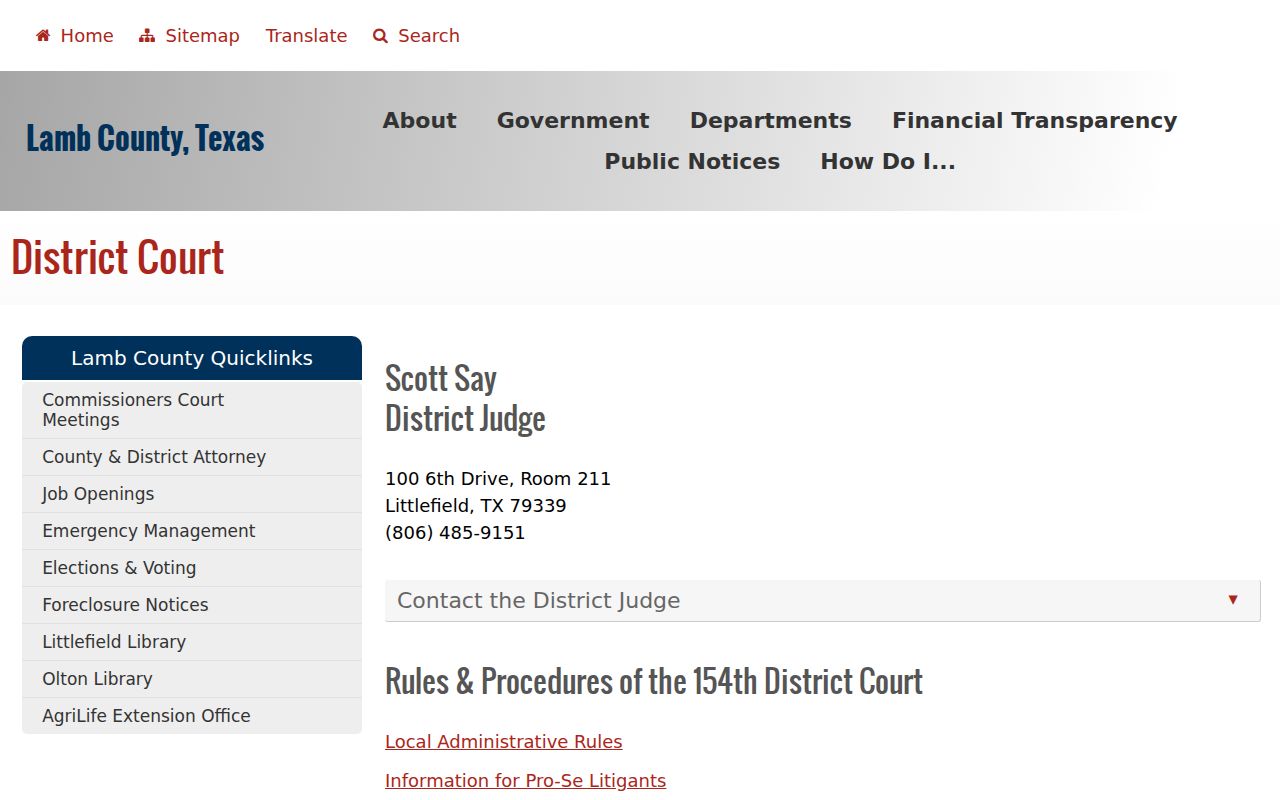
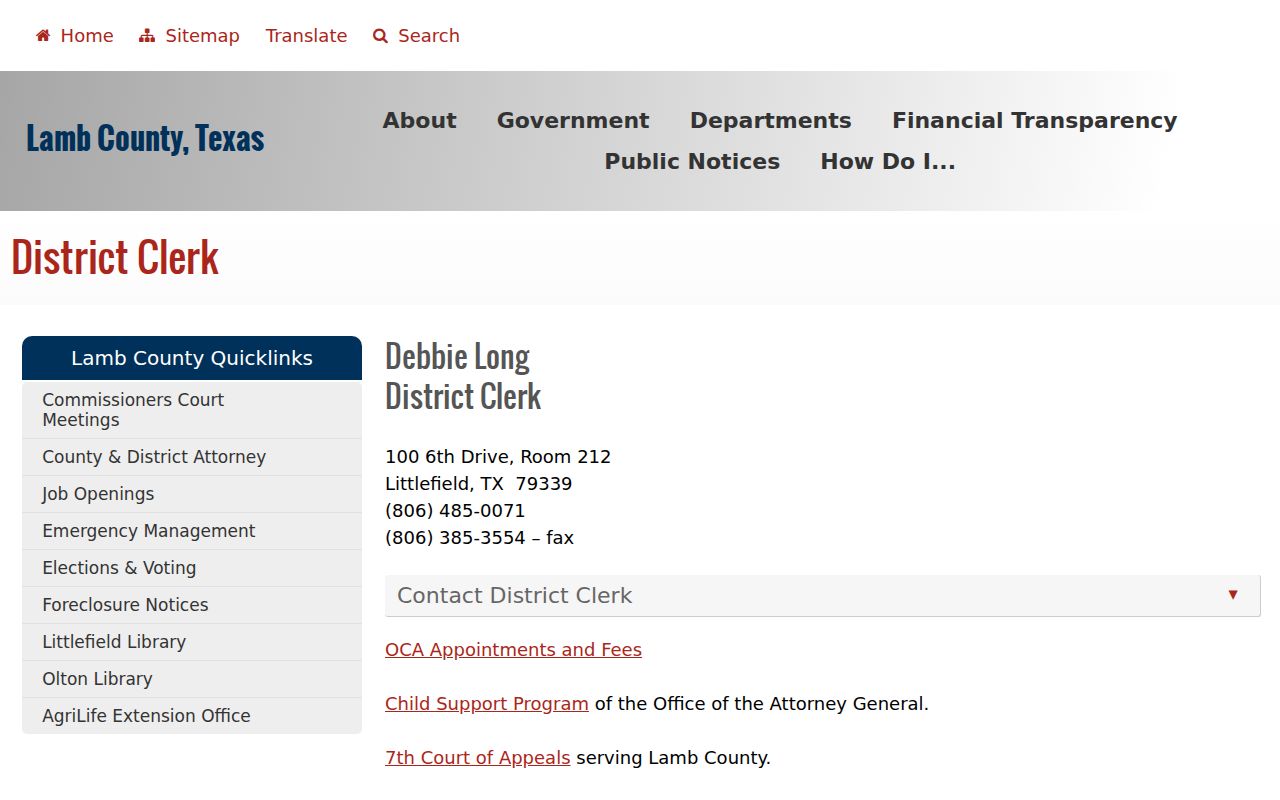
The 154th District Court is Lamb County's felony court, and Judge Scott Say presides. It sits in Room 211 at 100 6th Drive in Littlefield, reachable at (806) 485-9151. District Clerk Debbie Long works from Room 212 at (806) 485-0071, and her office takes open-records requests at 154districtclerk@co.lamb.tx.us. That clerk keeps the felony case files for the District Court. The DA's FAQ describes how prosecution and indictment come before any felony trial. The local rules publish no walk-in warrant schedule, bond window, or recall form. A lawyer can pull the file and contact the court ahead of an appearance. That court-and-clerk route is the one Lamb County itself lays out.
Ask the Lamb County court about the procedure for the actual case. General docket rules may not apply.
Inside a Lamb County Arrest Warrant
A Lamb County arrest warrant follows state law, not a local template. Chapter 15 covers the arrest warrant itself. Chapter 45A sets process for justice and municipal courts. What sits in the public file may be less than the full affidavit, since supporting material can be restricted.
Texas framework:
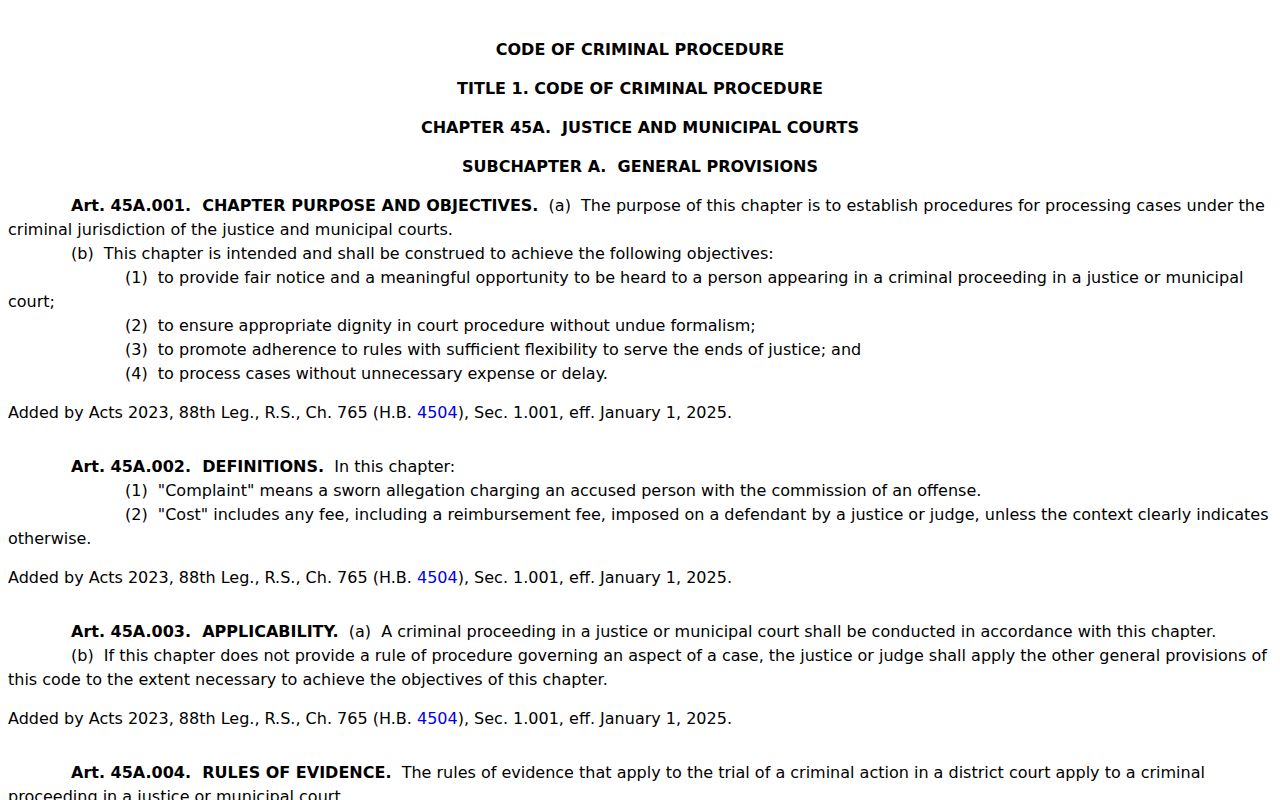
Code of Criminal Procedure Chapter 15 addresses arrest warrants and their requisites.
Code of Criminal Procedure Chapter 45A governs justice and municipal court criminal procedures, including warrants.
Lamb County publishes no warrant-number format, bond schedule, or status glossary. Another county's fields will not match. Chapter 45A gives justice and municipal courts their own separate process rules.
Read the statute with the issuing court’s instructions for the case.
A Sworn Complaint Starts the Lamb County Arrest Process
Under Chapter 15, a magistrate may issue an arrest warrant once a sworn complaint establishes probable cause. The warrant is directed to a peace officer. It names the person to be arrested or gives the description the law allows, states the alleged offense, and identifies the judicial authority issuing it. A court record can hold more than the public docket shows. Access depends on the law and the case's status. The County and District Attorney's page notes that prosecution in Lamb County spans Class C offenses up to capital felonies and leans on law-enforcement partners. That office does not verify warrants. The court holds the records, and law enforcement handles service routing.
Lamb County Arrest Record Fields Depend on the Court
No Lamb County office publishes a warrant sample, display format, or status codes. A legal field may never reach the public record. Treat any field list as a question guide, not a promise of what is available.
| Court caption | May identify District Court, County Court, JP, or municipal authority. |
|---|---|
| Cause or warrant number | Local format was not published; use only an identifier printed on official paperwork. |
| Offense and complaint | Official offense label and sworn complaint reference, which may be restricted. |
| Issuing magistrate | Judicial officer and signature authority under the applicable law. |
| Directed agency and dates | Officer, issue, service, return, and status details may be court-controlled. |
| Bond or release terms | The DA FAQ says a judge sets bond; no county schedule is published. |
Use this as a question list for the Lamb County clerk. Do not assume every field is public. The court decides what it releases.
If There's an Arrest Warrant for You
The County and District Attorney FAQ is clear on one point: a judge sets bond, not a public county table. Lamb County posts no bond schedule, jail bond window, or instructions for turning yourself in. The DA's office can explain its own role in a case. Per the FAQ, though, no county office can confirm or verify an arrest warrant. That answer belongs to the issuing court. Anyone with a personal stake should ask a lawyer about addressing bond, and whether a hearing or motion fits. A vendor payment or an uncoordinated court appearance will not resolve a warrant on its own.
Before you act: Confirm the issuing court and get legal advice about the safest way to address an arrest-warrant concern.
Where Lamb County Arrest Warrants Are Checked
Start with the clerk whose court matches the case. A felony record request goes through the District Clerk for the 154th District Court. A county-level misdemeanor belongs to the County Clerk, Room 103, at (806) 485-0053. JP and municipal matters stay with the lower court that issued them. The Sheriff's Office can field law-enforcement routing questions, but its site offers no public name search. The County Clerk request form lists the fees: $5 for a search, $1 per copy page, and $5 for certification. It asks for the document details and the requester's information. The District Clerk publishes a dedicated open-records email for Lamb County record requests. A Public Information Act request reaches existing records, subject to exemptions, and needs no live legal conclusion. If one office lacks the case, the city, precinct, and court caption point to the right custodian.
For a different court, follow the record caption in Lamb County. Do not send the request to the felony clerk.
Serving Arrest Warrants in Lamb County
The Sheriff's Office is Lamb County's countywide law-enforcement contact. Sheriff Gary Maddox's page lists 1200 East Waylon in Littlefield, phone (806) 385-7900, and fax (806) 385-9400. Littlefield Police serves the county seat. Municipal process may fall to a city peace officer or marshal. The county does not publish which officer or agency holds any given warrant. Service routing is not warrant confirmation. The county FAQ says its offices cannot verify arrest warrants. Ask the issuing court about the case itself, and call 911 for emergencies.
Restricted Lamb County Arrest Records May Be Withheld
Not every Lamb County record is open. Family Code Chapter 58 shields juvenile warrant and justice records from the public. Sealed files and investigative material can also be withheld, and dockets sometimes leave out file details. A Texas Public Information Act request is the lawful route: name the custodian and the record, with a date or case number. If something is withheld, ask which exception applies. A blank result settles nothing about legal status.
Comparing Arrest, Summons, and Bench Warrants
The three warrants work differently. An arrest warrant follows sworn probable cause. A summons just directs you to appear. A bench warrant follows a missed court requirement. Texas posts no public all-warrant database; the DPS Databank is gone, and FTA/FTP covers only reported offenses. Federal matters go through the Northern District and the U.S. Marshals. Keep a copy of any official record, and ask the issuing court what it means. If a record could sway a decision, get a lawyer's advice. For local routing step by step, see the Lamb County warrant records overview.